How to survive a hard disk disaster
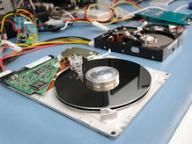
Inside the case of a hard disk, platters – made of metal or glass – are coated in a thin layer of magnetic material. A read-write head floats tens of nanometers above the surface of the platter, flicking back and forth to read from the data tracks recorded on the platters as a series of ones and zeros.
These tracks are tightly packed – Seagate has drives that cram over 52GB into a square inch, though most commercially available disks store less.
If all this sounds precarious to you, you’d be right. If things can go wrong, they will go wrong – and that’s a lesson many of us have had to learn the hard way.